
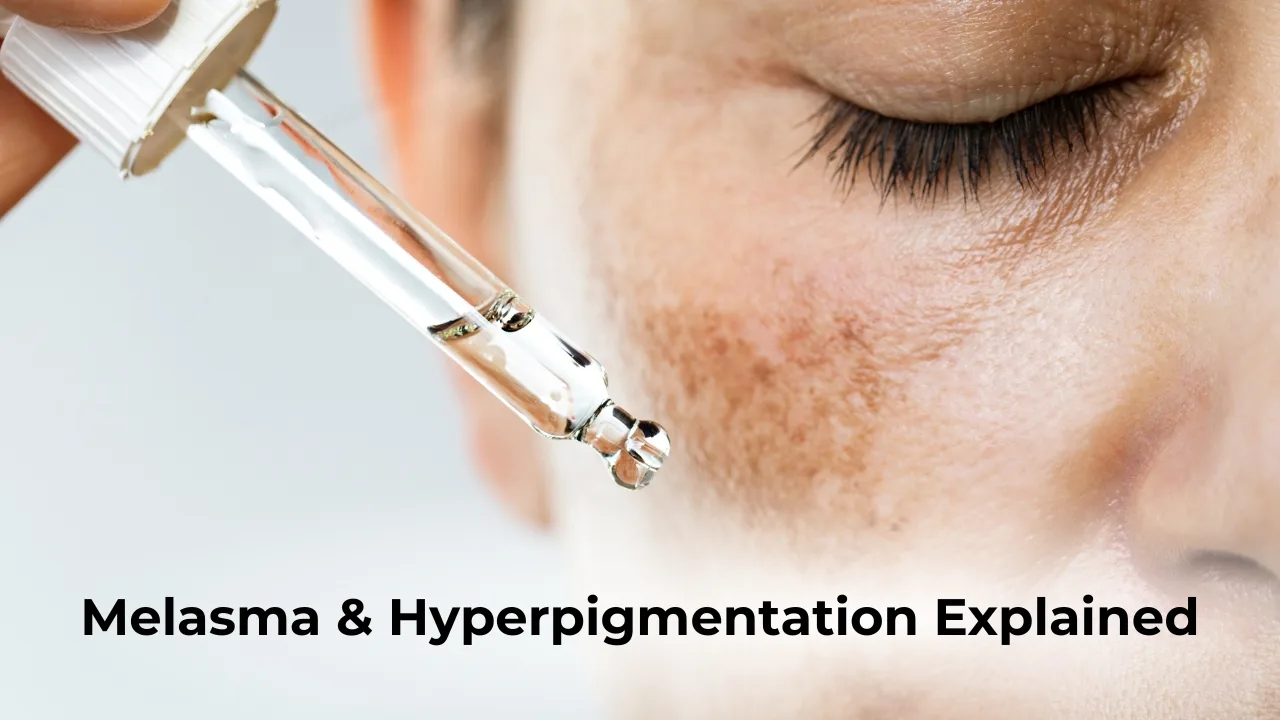
Struggling with dark spots or stubborn patches? Learn the real causes of melasma and the skincare routine that helps fade them.
Key Highlights: Melasma and Hyperpigmentation Skincare Routine
- Hyperpigmentation = umbrella term; melasma = specific, often hormone- and sun-driven form.
- Triggers include UV, visible light, heat, and hormones; protective habits reduce relapses .
- Supportive skincare routine matters: gentle cleansing, hydrating serums, and barrier creams help skin cope .
- Niacinamide is evidence-based for improving the appearance of dark spots and uneven tone .
- Tinted sunscreens with iron oxides protect against visible light, a known melasma trigger .
- ImpressionZ® products are designed for supportive daily care, not treatment.
- This guide is educational only — melasma and hyperpigmentation require professional diagnosis and treatment .
Table of Contents
Dark patches or uneven skin tone can be frustrating, especially when they keep coming back despite your best efforts. For many, this isn’t just a cosmetic concern — it’s a daily confidence challenge. Two common terms often come up: hyperpigmentation and melasma.
Hyperpigmentation is a broad term that covers any skin discoloration caused by excess melanin. Melasma is a specific type of hyperpigmentation that tends to be more stubborn and often triggered by hormones, sun exposure, and heat.
Important note: This article is for educational purposes only. ImpressionZ® products are designed for supportive skincare and are not intended to diagnose, treat, or cure melasma or hyperpigmentation. For professional treatment, always consult a board-certified dermatologist.
What Is Hyperpigmentation?
Hyperpigmentation simply means patches of skin that are darker than the surrounding areas due to increased melanin production. This can include:
- Sunspots (from UV exposure)
- Post-inflammatory hyperpigmentation (PIH) (dark marks left after acne, cuts, or irritation)
- Melasma (a chronic form of pigmentation often triggered by hormones, pregnancy, or sunlight)
While hyperpigmentation can fade over time, melasma tends to persist or relapse, making it particularly challenging. According to the American Academy of Dermatology (AAD), melasma is more common in women and people with medium to darker skin tones .

What Makes Melasma Worse?
Several triggers can worsen melasma and hyperpigmentation:
- Sunlight (UV + visible light): Both UV and visible light can stimulate pigment cells, making dark patches more pronounced .
- Heat & infrared exposure: Even if you’re wearing sunscreen, heat itself can trigger melasma flares .
- Hormonal shifts: Pregnancy (“the mask of pregnancy”), birth control, and thyroid issues are common contributors.
- Harsh skincare: Bleaching creams, DIY lemon masks, or over-exfoliation can damage the skin barrier, leading to more irritation and darker patches.
- Lifestyle/environmental factors: In hot climates like the UAE, a mix of strong sunlight, heat, and air conditioning dryness creates a perfect storm for skin imbalance.
Supportive Skincare Routine for Melasma & Hyperpigmentation
While only a dermatologist can prescribe medical treatments (such as hydroquinone, tretinoin, or laser procedures), a gentle, barrier-first skincare routine can support your skin’s comfort, resilience, and appearance.
Step 1 – Gentle Cleanse
ImpressionZ® Micellar Water Makeup Remover
- Removes sunscreen, makeup, and impurities without harsh rubbing.
- Micellar technology attracts dirt while leaving skin hydrated — ideal for sensitive, pigmentation-prone skin .
- Why it matters: harsh cleansers strip your skin, causing inflammation that may worsen pigmentation.
Step 2 – Hydration & Brightening Support
ImpressionZ® Snail Facial Glow Elixir
- Powered by snail mucin, niacinamide, and peptides.
- Niacinamide is clinically studied for improving the appearance of hyperpigmentation .
- Peptides support barrier repair and skin renewal.
- Why it matters: hydrated, balanced skin is more resilient and looks brighter over time.
Step 3 – Barrier Moisturizer
ImpressionZ® Glow Recovery Face Cream
- Deeply hydrating cream designed to comfort stressed skin.
- Locks in serum benefits, strengthens the barrier, and leaves skin feeling supple.
- Why it matters: melasma-prone skin often becomes dry and reactive; barrier repair is key.
Optional Comfort Step – Cooling Tool
ImpressionZ® 24K Ice Globes
- Provides an instant cooling sensation after sun or heat exposure.
- Helps calm visible redness and gives skin a refreshed look.
Lifestyle Habits That Help
- Broad-spectrum sunscreen (SPF 30+): Your dermatologist will likely recommend tinted sunscreens with iron oxides, which protect against visible light as well as UV .
- Protective clothing: Hats, sunglasses, and seeking shade are simple but powerful.
- Consistent hydration: Drinking water + using moisturizers helps keep skin plump and resilient.
- Avoid harsh “quick fixes”: Lemon juice, bleach creams, or over-exfoliation can do more harm than good.
FAQs
1. Is melasma curable?
Melasma is chronic and tends to wax and wane. While treatments exist, only a dermatologist can recommend them. Supportive skincare can help your skin look and feel better .
2. Which ingredients can support melasma-prone skin?
Niacinamide, peptides, and hydrating ingredients support skin comfort. Avoid harsh DIY remedies that can irritate .
3. Do I need a tinted sunscreen?
Yes, if recommended by your dermatologist. Tinted sunscreens with iron oxides protect against visible light, which contributes to melasma flares .
4. Can micellar water replace a cleanser?
Micellar water is excellent for gentle cleansing, especially when skin feels sensitive. Some prefer to follow with a mild cleanser — ask your dermatologist what’s right for you .
5. Does heat really make melasma worse?
Yes. Heat and infrared exposure are proven triggers, even without direct sunlight .
6. Are peels or lasers safe for melasma?
They can help, but only under a dermatologist’s care. Some procedures may cause rebound pigmentation if done improperly .
7. How long before I see improvements with supportive skincare?
In clinical research, niacinamide showed visible results in 4–8 weeks, but timelines vary. Always pair supportive skincare with professional guidance .
Final Thoughts
Melasma and hyperpigmentation are common concerns worldwide. While only a dermatologist can provide medical treatments, you can take meaningful steps at home to support your skin.
A gentle, barrier-first routine — like using the ImpressionZ® Micellar Water Makeup Remover, Snail Facial Glow Elixir, and Glow Recovery Face Cream — helps keep your skin comfortable, hydrated, and resilient.
Remember: supportive skincare is not a cure, but it’s a powerful partner alongside your dermatologist’s advice.
Explore ImpressionZ®’s Even Tone Support Set → a three-step supportive routine to care for your skin daily.

Related Articles
- Melasma & Hyperpigmentation: Causes, Triggers & Supportive Skincare Routine
- Safe Ingredients for Uneven Tone (What to Use & What to Avoid)
- Melasma vs. Dark Spots vs. PIH—What’s the Difference?
- Micellar Water vs. Traditional Cleansers: What’s Gentlest for Sensitive Skin?
- Barrier-First Skincare: Why It Matters for Lasting Results
Citations
- American Academy of Dermatology — Melasma overview & care
- Cleveland Clinic — Causes & triggers of melasma (UV, visible light, heat)
- Harvard Health — Barrier repair and tinted sunscreens for visible light
- Peer-reviewed studies: Hakozaki et al., Br J Dermatol 2002; Navarrete-Solís et al., 2011 (niacinamide improving hyperpigmentation)
- DermNet NZ — Clinical overview of melasma
Support & Information
- Shop the ImpressionZ® Collection
- About ImpressionZ® – Our Story & Commitment
- ImpressionZ® Skincare & Beauty Blog – Latest Articles & Expert Advice
- ImpressionZ® Customer Reviews – Real Feedback & Trusted Results
- ImpressionZ® FAQ – All Your Questions Answered
- ImpressionZ® Loyalty Rewards Program – Earn Points & Exclusive Benefits
Follow ImpressionZ® on Social Media
- Subscribe to our YouTube channel
- Follow us on TikTok
- Follow us on Instagram
- Like us on Facebook
- Find us on Pinterest